Best Online Master's Degrees in Accounting 2026
Find the very best online master's degree in accounting from our list of accredited schools ranked by the number of accounting master’s graduates. This shows which cohorts are the most successful in this field.
Key Takeaways:
- Western Governors University ranks #1 for its online M.S. Accounting, with 372 program graduates in the most recent year.
- St. John’s University delivers the strongest earnings outcome, with median graduate pay of $108,415 among its accounting master's graduates.
- Auburn University excels in student success, with a 93% retention rate among first-year students.
You can review our full methodology to learn more about how we rank schools. After our list, we share expert advice from Hasan Hanif, MAcc, on CPA preparation and how online accounting graduate students can prepare themselves for long-term success.

Best Online Master's Degrees in Accounting 2026
| Rank | School | Graduates | Annual Tuition | Median Salary | Recommendation |
|---|---|---|---|---|---|
| Western Governors University | 372 | $9,510 | $85,208 | 75% | |
| Liberty University | 144 | $11,300 | $77,963 | 75% | |
| DeVry University | 119 | 2 years, and the tuition per credit, which is ."> $18,624 | $81,554 | 66% | |
| Purdue Global | 112 | $11,241 | $66,530 | 76% | |
| Colorado State University Global | 111 | $10,125 | N/A | N/A | |
| Florida International University | 111 | $18,570 | $100,865 | 93% | |
| Georgia Southern University | 108 | $8,100 | $80,136 | 92% | |
| Auburn University | 82 | $30,000 | $96,671 | 93% | |
| St. John's University | 79 | $51,975 | $108,415 | 91% | |
| Maryville University | 72 | $16,246 | N/A | 61% | |
| Eastern Washington University | 66 | $21,600 | N/A | 91% | |
| DePaul University | 65 | $54,832 | $100,063 | 96% | |
| Southern New Hampshire University Online | 58 | 2 years, and the tuition per credit, which is ."> $9,555 | $85,710 | 71% | |
| Boise State University | 57 | $9,570 | $89,705 | 92% | |
| University of Maryland Global Campus | 50 | $11,862 | $90,488 | 71% |
Best Online Master's Degrees in Accounting 2026 - Program Details
- Graduates: 372
- Annual Tuition: $9,510
- Median Salary: $85,208
- Recommendation: 75%
Why we like them: Ranked #1, WGU awarded 372 online M.S. in Accounting degrees, which tells us you are selecting a program with significant momentum as well as a sizeable peer network. WGU’s competency-based model is a defining differentiator. Students can advance the moment they demonstrate mastery. We also like how WGU embeds three formal, résumé-ready certificates into required coursework.
- Graduates: 144
- Annual Tuition: $11,300
- Median Salary: $77,963
- Recommendation: 75%
Why we like them: Liberty's ACBSP-accredited, online MS in Accounting is aligned to the 150-hour CPA pathway, and we appreciate the breadth of targeted specializations — Forensic Accounting, Audit and Financial Reporting, Financial Services, Leadership, Taxation, Business, and a General track. Overall, it's a data-driven accounting program designed to help students “transform businesses through data analysis.”
- Graduates: 119
- Annual Tuition: 2 years, and the tuition per credit, which is ."> $18,624
- Median Salary: $81,554
- Recommendation: 66%
Why we like them: You can accelerate through the Master’s Advantage, which waives up to three courses (nine credits) based on your prior business or tech degree. You can finish in as little as 1 year and 4 months with qualifying prior learning and an accelerated load. Even so, you can still stack credentials by earning an embedded Accounting Graduate Certificate on the way to the MBA in Accounting online, which is ACBSP-accredited.
- Graduates: 112
- Annual Tuition: $11,241
- Median Salary: $66,530
- Recommendation: 76%
Why we like them: All of PG’s business programs are ACBSP-accredited and the institution is HLC accredited. The accounting master's curriculum is designed to meet educational requirements to sit for the CPA exam while providing state-by-state licensure guidance. It also provides CIA® and CMA® preparation, all as part of the single master's program.
- Graduates: 111
- Annual Tuition: $10,125
- Median Salary: N/A
- Recommendation: N/A
Why we like them: CSU Global's online MPA prepares you for the CPA as well as the CMA, CIA, CFE, FSAC, and even CFA pathways. You tailor your accounting program through five two-course emphases and can add a for-credit accounting internship that would give you hands-on experience even in an online format.
- Graduates: 111
- Annual Tuition: $18,570
- Median Salary: $100,865
- Recommendation: 93%
Why we like them: FIU, which has a 93% recommendation rate from nearly 600 students we've surveyed, holds AACSB accounting accreditation, placing you among roughly 1% of programs worldwide with this quality marker. Here, you would move through an accelerated, 10-month, cohort-based, lock-step format with a clear choice of two tracks — Taxation or Assurance. You would also gain access to the Becker CPA Course, giving you integrated CPA exam preparation.
- Graduates: 108
- Annual Tuition: $8,100
- Median Salary: $80,136
- Recommendation: 92%
Why we like them: Georgia Southern pairs its WebMAcc with an AACSB-accredited School of Accountancy. Its licensure readiness is exceptional, as the description explicitly confirms that the curriculum qualifies you to sit for the CPA exam in all 50 states, D.C., and five U.S. territories, removing a frequent portability hurdle if you plan to move at some point. You can layer distinctive credentials through certificates in Ethical Leadership and Forensics Interviewing.
- Graduates: 82
- Annual Tuition: $30,000
- Median Salary: $96,671
- Recommendation: 93%
Why we like them: With two pacing tracks, you can finish in as few as 12 months full time or in about two years while working full time, and we appreciate the single three-day, on-campus residency that delivers concentrated engagement. Anchored by AACSB accounting accreditation, you also benefit from outcomes evidence, including an 85% first-time CPA Exam pass rate within a year of graduation for alumni with advanced degrees.
- Graduates: 79
- Annual Tuition: $51,975
- Median Salary: $108,415
- Recommendation: 91%
Why we like them: STJ’s online accounting master's program fulfills New York’s CPA education requirements and layers in professional recognition: separate AACSB accreditation in both business and accounting (a distinction held by only 194 institutions worldwide) and endorsements from ACCA, ACFE, IMA, the IIA’s IAEP, and ISACA’s model curriculum. The NASBA Center for the Public Trust online ethics capstone embedded in the program is a nationally recognized component.
- Graduates: 72
- Annual Tuition: $16,246
- Median Salary: N/A
- Recommendation: 61%
Why we like them: Maryville embeds Becker CPA Exam preparation into the curriculum, and you choose one of two CPA Evolution-ready tracks — Business Analysis and Reporting or Information Systems and Controls. You can complete an accelerated 30-credit option in as few as 12 months if you bring prior accounting experience, while a structured bridge program lets you pivot from a nonaccounting background and finish in as few as two years.
- Graduates: 66
- Annual Tuition: $21,600
- Median Salary: N/A
- Recommendation: 91%
Why we like them: EWU’s MPAcc is purpose-built around the Business Analysis and Reporting focus that aligns with the CPA Evolution BAR discipline, and you gain training in analytics, ETL, and data presentation. You can accelerate your progress with six-week courses, seven annual start dates, and an as-few-as eight-month completion pathway, which we rarely see at peer MPAcc programs online.
- Graduates: 65
- Annual Tuition: $54,832
- Median Salary: $100,063
- Recommendation: 96%
Why we like them: DePaul’s online MSTAX stands out with a STEM designation that fuses advanced tax with analytics and emerging technology, giving you hands-on exposure to the tools firms now expect. As part of this master's degree, you have a capstone requirement that produces a portfolio of client-ready work. Faculty bring 300-plus years of collective professional experience, and the program boasts a 50-year history with 2,000-plus graduates.
- Graduates: 58
- Annual Tuition: 2 years, and the tuition per credit, which is ."> $9,555
- Median Salary: $85,710
- Recommendation: 71%
Why we like them: SNHU lets you earn a CPA discipline-aligned certificate — Business Analysis and Reporting, Information Systems and Controls, or Tax Compliance and Planning — while completing the online accounting MS, so you finish with two credentials in roughly the same time as a typical master’s. And if you want, you can add Management Accounting (CMA-aligned) or Forensic Accounting & Fraud Examination (CFE-aligned) certificates into your online program.
- Graduates: 57
- Annual Tuition: $9,570
- Median Salary: $89,705
- Recommendation: 92%
Why we like them: BSU's 92% recommendation rate (based on over 100 reviews) is a good indicator of quality and plenty of support for online students. BSU stands out for dual AACSB accreditations in business and accounting, and this master's in accountancy program can be finished in as few as 12 months if you hold an accounting bachelor’s. Also, BSU reports CPA pass rates above national averages, another sign of quality.
- Graduates: 50
- Annual Tuition: $11,862
- Median Salary: $90,488
- Recommendation: 71%
Why we like them: UMGC offers a cross-disciplinary program that merges accounting with financial management and features options such as Fintech and Decision Making and Behavioral Finance. We especially like UMGC’s external validations through the ACFE Anti-Fraud Education Partnership and the Institute of Internal Auditors’ Internal Audit Academic Alliance, which align you with internal audit and anti-fraud competencies that employers prize.
From Junior Accountant to Founder: Hasan Hanif Shares What Today’s Accounting Graduates Need to Succeed
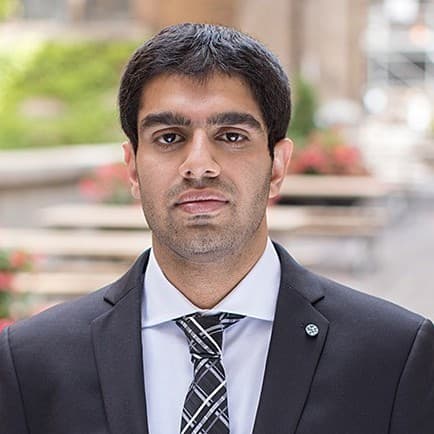
Master of Accounting Graduate, Founder of Colour Vistas
"Employers in the current scenario have realized that online degrees may impart good training, though they do seek certain software training. I have met many accountants who have taken the step of moving to higher and better jobs just because they were able to operate these tools effectively. Students would be advised to ensure that they become competent in these programs because they will have a competitive advantage immediately after school.
In the current accounting profession, QuickBooks, Excel, and tax preparation software such as TurboTax are a requirement.
As an online learner, it will be highly important to your professional growth to both utilize the fullest potential of the resources your program has to offer and also have practical experience with these tools.
CPA certification is a game-changer, as far as I am concerned. Although it is not an urgent requirement in every accounting job, it certainly creates opportunities in career growth and better paying jobs.
There are several ways that online students can start preparing during their program; this can be accomplished by completing more course work that is related to the CPA exam, or even forming study groups."
EXPERT TIP
"I would always recommend to anyone thinking of accounting to begin getting yourself acquainted with the exams requirement early as this will assist you in making the easy move out of the academic surrounding into the professionals requirement of the job."
FAQs About an Online Master's Degree in Accounting
What Is a Master's in Accounting Degree?
An online master's degree in accounting focuses on financial reporting, auditing, and taxation, helping to improve analytical skills and deepen industry knowledge. These online graduate programs are designed to help you balance studies with personal or professional commitments while improving career prospects in the accounting field.
Earning a master's degree in accounting helps you prepare for higher levels of responsibility in the field by providing you with advanced knowledge of the discipline. Accounting master’s degrees can go by various names, but the two most common are Master of Accountancy (MAcc) and Master of Science in Accounting (MSA).
Most master's in accounting degrees take between one and two years, depending on whether you're a full-time or part-time student as you complete the required 30-40 credit hours. Much of the coursework covers intermediate and advanced accounting practices, building on the foundational information provided in a bachelor’s program. Additional topics include taxation, financial reporting, fraud examination, auditing, international accounting, and ethics in financial management.
You can earn a master’s of accounting online or on campus. If you opt for distance learning, your online program will probably be made up of primarily asynchronous classes, which means they have no set meeting times. You can sign in on your own schedule to access course materials and complete assignments.
Some master's degree programs, however, may have some synchronous elements, such as a live class discussion. Naturally, you'll complete any internship or work experience requirements in person.
When researching online accounting degrees, it's important to consider only those schools that have been accredited — like all of the schools on our list of the best online master's degrees in accounting. Accreditation is a sign that the school has passed an independent quality review. Enrollment in an accredited program is required for eligibility for financial aid, and it may be required for you to sit for certification exams in your state.
You may also want to select an online accounting master's program that has earned programmatic accreditation from the Accreditation Council for Business Schools and Programs () or the Association to Advance Collegiate Schools of Business ().
What Are the Admission Requirements for a Master’s in Accounting?
For master's degree consideration, you need to have an undergraduate degree from an accredited college with a minimum GPA of 3.0. If you haven't already earned a bachelor's in accounting or an accelerated bachelor's in accounting, admissions officers may ask you to complete prerequisite courses in accounting, economics, or statistics before starting your master’s program.
You’ll need to submit your program application about six to nine months before your desired start date. Among the items that schools may ask you to include with an application are official transcripts from your undergraduate institution and any other colleges where you've taken courses, letters of recommendation from professors familiar with your school work, a personal essay about your accounting career goals, and your professional resume. Some of the more competitive schools may also require GRE or GMAT scores.
What Courses Do You Take in a Master’s in Accounting Program?
Accounting master's programs often have similar curricula in order to meet the educational standards approved by the U.S. Department of Education. Although the core courses may have different names at different schools, the learning outcomes tend to be the same. Some schools may also include an optional or required internship for students without previous accounting work experience.
- Accounting Ethics: Accountants perform an important ethical role by helping institutions honestly record and report their finances. This course thoroughly covers the Code of Professional Conduct of the American Institute of Certified Public Accountants (AICPA), with professors noting where ethical imperatives exceed the letter of the law.
- Intermediate Accounting: Enrollees examine current laws, regulations, and general accounting principles that go beyond the fundamentals. Professors typically lecture on cash-flow statements, disclosure, the time value of money, and intangible assets and liabilities.
- Managerial Accounting: This class discusses how leaders use accountants' work to inform their decision-making in business, government, and nonprofit organizations. Students may learn reporting and visualization, business communication, budgeting, and strategic financial planning.
- Research and Communication: Course faculty teach students how to find accounting data and present their findings to stakeholders. Enrollees often have to complete several small research products in which they seek transaction patterns, fraudulent entries, or sections of tax code that are relevant to particular problems.
- Technology and Data Analytics: The aim of this class is to keep learners on the cutting edge of accounting technology. Topics may include automation, cloud networks, quantum computing, and machine learning.
What Concentrations Can You Pursue in a Master’s in Accounting Program?
It's common for accounting master's programs to let you specialize in a particular branch of accounting. You'll use your choice of elective courses to help improve your competencies in the concentration. As an accounting graduate, a specialization may also give you a competitive edge when you're job hunting. Some of the most popular concentrations you can find in accounting master's programs include:
- Auditing specialists review the accounting of outside employers. They take courses in financial reporting and disclosure, fraud prevention, and ethics.
- Business analytics, sometimes called "business intelligence," means using data to analyze trends in variables such as profits and spending. Courses in this specialization often cover data collection, predictive analytics, and visualization.
- Forensic accounting uses accounting techniques to investigate crimes. In their courses, students learn to identify red flags in financial statements, perform digital prevention and detection techniques, and interview fraud suspects.
- Taxation knowledge can be useful for all varieties of accountants, making this a potentially versatile concentration. Coursework includes lessons on tax law, corporate tax strategy, flow-through entities, and tax research.
What Can You Do With a Master's in Accounting Degree?
With a master's in accounting degree, you will probably go to work in one of the :
- Public accountants often work with clients on a contractual consulting basis and may work for a dedicated accounting firm, such as Deloitte, PricewaterhouseCoopers, Ernst & Young, and KPMG.
- Private accountants perform accounting services for just one company or business.
- Government accountants, including state auditors, work for government agencies.
- Educational accountants conduct research and teach students to become accountants.
However, there are opportunities for additional education and other related career paths.
Further Education
While many accountants build rewarding and lucrative careers on bachelor's and master's degrees in accounting, you may be interested in pursuing even more advanced education:
- Doctorate in Accounting: Some employers may require their senior accounting executives to hold doctorates. However, graduates who earn an accounting doctorate usually become college professors or researchers. Because of the intense study and research necessary for a doctorate, those with the degree often serve as legal witnesses in cases of accounting malpractice and securities fraud. They may also work as consultants for the government or on criminal cases that need forensic accountants.
- Accounting Certificates: After completing an online master's degree in accounting, you may want to pursue additional education on very specific topics, such as auditing or financial management. If so, post-graduate certificates may be the perfect choice for you. Most accredited certificate programs, which are available online and on campus, require anywhere from eight to 16 credits. You may be able to earn a certificate in a year or less.
Potential Careers
Once you've earned an online master's in accounting, you can pursue accounting positions in a wide range of work environments as a generalist or specialist in specific functions, such as auditing or tax accounting. You may find employment in a large corporation or financial institution, go to work in one of the big accounting firms, or start your own business providing accounting services to individuals and small businesses
A master's degree may also allow you to branch out into other areas of business. Finance is perhaps the most likely field to move into as there are countless opportunities to pursue related occupations, such as a budget analyst, personal financial planner, or financial manager. However, if you would like to keep your business career options open, you may want to earn a master's in business administration (MBA) or perhaps an MBA specializing in accounting instead of focusing narrowly on accounting.
Accounting Certification
To enhance your accounting career, you may also want to pursue certification. Some certifications are required, while others are voluntary or simply preferred by employers. Certification demonstrates your commitment to professional development as well as your high level of skill in a particular aspect of accounting or finance.
One of the best known and most prestigious certifications is the (CPA) designation. CPA certification allows you to provide multiple types of high-level accounting and auditing services. CPA licensure requirements vary by state, but in general you'll need to complete 150 credit hours of accounting courses at an accredited university. Your master's degree provides the extra 30 credit hours beyond the 120 earned in your bachelor's program, which is why most students who intend to become CPAs earn accounting master's degrees. You'll then need to pass the CPA exam.
How Much Is a Master's Degree in Accounting?
Using the NCES's calculation of per year for a graduate degree, we can estimate that a two-year master's in accounting will cost $39,498. However, costs vary widely by school. In general, public schools are the most affordable for in-state students. Next are for-profit private schools, with nonprofit private schools the most expensive.
How Long Is a Master's Degree in Accounting?
Designed for working adults, most online master's programs in accounting take approximately two years to complete. Some schools offer accelerated online master's degrees in accounting, which full-time students can complete in one year.
Is a Master's Degree in Accounting Worth It?
Earning a master's degree in any subject is a significant investment of time and money, so it's only natural to question whether the degree will be worth it. The answer is, in part, dependent on your personal goals and circumstances. If your goal is to become a CPA, a master's degree is essential. Additionally, data from the Bureau of Labor Statistics (BLS) indicates that the for master's degree holders is $1,574, as compared to a median of $1,334 for all bachelor's degree holders, which translates into $12,500 more per year.
Highly trained accountants will always be in demand, and those who develop advanced skills and possibly become CPAs are likely to land higher-paying positions in the field. You may end up working for a large corporation, an accounting firm, or as an independent consultant. Regardless of the specific path you choose, earning an on-campus or online accounting degree is an effective way to advance your career.
Do You Need a Master's Degree To Be an Accountant?
No, you do not need a master's degree to be an accountant. Many graduates with bachelor's degrees in accounting establish solid careers in this field. However, earning a master's degree and becoming a CPA may allow you to increase your lifetime earnings potential. According to the BLS, the median annual salary for all is $81,680, but an accounting master's degree and certifications may enable you to earn an income that's significantly higher than the average accountant salary.
Student Reviews of Online Accounting Programs
Generally, a good education, but some of the teachers are extremely poor. AI is used, and that is fine, but there needs to be more than AI when it comes to teaching and grading. Again, most of the teachers are excellent, but I have experienced a couple who only use AI, and this is not acceptable.
Review Date: 5/27/2026
Would Recommend: No
Helpful for Career: No
University of Phoenix is great school/college at first my courses got hard but as I saw my progress though out the months I started to learn very and easily quite quickly and I love it, it’s great to attend it online and I’m sure it’s the same as if attending it on campus.
Review Date: 10/15/2025
Would Recommend: Yes
Helpful for Career: Yes
I am currently attending Louisiana State University pursuing my Master's in Business Management with a concentration in sports management. I anticipate graduating later this year, in December 2026. My Experience at LSU has been positive, considering the quality of academics offered. The school has knowledgeable professors and offers practical coursework that helps students to develop key skills in their related areas of study. This is an institution that I would highly recommend to others interested... Read More
Review Date: 3/19/2026
Would Recommend: Yes
Helpful for Career: Yes
I would recommend any working adult that wants to get a degree to select University of Phoenix. This school help me to learn I received both a bachelor's and masters. It allow me to have a life despite working I was still able to spend time with family and alone.
Review Date: 1/28/2026
Would Recommend: Yes
Helpful for Career: Yes
My experience at Northeastern State University has been very positive overall. One of the things I appreciate most about the university is the supportive environment created by the professors and staff. Most of my instructors have been approachable and genuinely interested in helping students succeed. Whether it was answering questions after class, offering feedback on assignments, or giving advice about career paths, I’ve always felt like the faculty wanted students to do well.
Another thing that... Read More
The campus itself also has a welcoming atmosphere. It’s easy to navigate, and there are plenty of places to study, relax, or meet up with friends. Student organizations and campus events also give students opportunities to get involved and connect with others who share similar interests. These activities help create a sense of community that makes the college experience more enjoyable.
In addition, Northeastern State University offers a variety of academic programs that help prepare students for their future careers. The courses I’ve taken have helped me develop practical skills that I know will be useful after graduation. I also appreciate that many professors bring real-world experience into the classroom, which makes the lessons more relevant and engaging.
Overall, my time at Northeastern State University has been a great experience. The supportive professors, smaller class sizes, welcoming campus environment, and strong academic programs all make it a place where students can learn, grow, and prepare for their future. I would definitely recommend it to students looking for a quality education and a positive college experience.
Review Date: 3/12/2026
Would Recommend: Yes
Helpful for Career: Yes
I have been happy with this experience. I was worried about the course load but it has been manageable. The professors have been helpful and responsive. I like the course format options. I am concerned that the competency MBA won’t help advance my career, but only time will tell.
Review Date: 8/12/2026
Would Recommend: Yes
Helpful for Career: No
I have been happy with this experience. I was worried about the course load but it has been manageable. The professors have been helpful and responsive. I like the course format options. I am concerned that the competency MBA won’t help advance my career, but only time will tell.
Review Date: 8/12/2026
Would Recommend: Yes
Helpful for Career: No
My second degree from the college and I'm thinking of returning in the next year. Not sure what I want to do next. But the instructors where always understanding. During my mental health they approved my leave and checked on me at least a few times a month.
Review Date: 6/25/2025
Would Recommend: Yes
Helpful for Career: Yes
This review based on my experience at grand canyon University is based on my personal experience as a student there, after completing my master's degree there the experience I enjoyed was based on pleasant encounters from the price of being a student there to the teachers and teachings.
Review Date: 5/7/2026
Would Recommend: Yes
Helpful for Career: Yes
The University of Phoenix offers a flexible and practical learning experience that works well for working adults. The online format makes it possible to balance school, work, and family without feeling overwhelmed. Courses are structured, relevant, and focused on real-world applications, not just theory.
Instructors are knowledgeable, supportive, and responsive, and the academic resources—such as tutoring, library access, and career support—are easy to use. The curriculum is clearly designed to help... Read More
Review Date: 12/22/2025
Would Recommend: Yes
Helpful for Career: Yes
The financial aid department is incredibly slow at processing refunds due to slow integration systems. It always a process when it comes to anything that the school owes you. They have their hands in the pot too much and like to spoon-feed you your funding as opposed to other schools. My overages have been in my account for two days, Tuesday is a Holiday. Extensive technical problems, they are starting to care less and less about the student experience. Buyer beware!
Review Date: 6/30/2023
Would Recommend: No
Helpful for Career: No
My experience was really good. Great professors and great classes. The curriculum was very easy to understand and everything was easy to navigate. I felt supported all throughout the journey and i am very happy to have made the decision to go back to school.
Review Date: 2/11/2026
Would Recommend: Yes
Helpful for Career: Yes
My experience was really good. Great professors and great classes. The curriculum was very easy to understand and everything was easy to navigate. I felt supported all throughout the journey and i am very happy to have made the decision to go back to school.
Review Date: 2/11/2026
Would Recommend: Yes
Helpful for Career: Yes
Most instructors are enriching and always available. The studies are congruent with the business world. The glasses are interactive and the topics are relevant. The new testing surveillance is easy and fair to use. The academic advisers are easy to contact and always available.
Review Date: 6/20/2023
Would Recommend: Yes
Helpful for Career: No
Strayer is the best n u can learn a lot from easygoing professors who are the most amazing people and will help u to succeed. The teachers who on call and will go over a lot with you to make sure you have the right answer to the problem to solve and they take time to explain the curriculum
Review Date: 11/21/2019
Would Recommend: Yes
Helpful for Career: No
I'm a recent graduate of the online master's of accountancy program. I noticed several recent, poor reviews of ESU and thought I would chime in. I received a job offer from one of the Big 4 accounting firms as a result of my enrollment at ESU. I was recruited by one of their campus recruiters for an accounting job with a Big 4 firm, which is a highly desirable outcome for an accounting student. I paid less than $11,000 for the entire degree and I have the same salary and job as people who spent 3x... Read More
Review Date: 1/9/2022
Would Recommend: Yes
Helpful for Career: No
I have previously received my undergraduates from UMUC, and while the program could use some updating in terms of materials utilized in its courses overall my experience has been great. Communication between student-and-professor can be shoddy, albeit not to the fault of the university. The courses at UMUC require a lot of self-study and personal time management, lending most of the effort required to do well in your courses to you and not so much the professor or even the materials provided. That... Read More
Review Date: 2/19/2019
Would Recommend: Yes
Helpful for Career: Yes
The financial aid process is horrible. They do not know what they are doing. They keep students waiting forever to get the reward. After accepting the reward, they keep students waiting forever again for disbursement. On top of waiting, they keep sending the invoice to students demanded payment or will being dropped. When students call for the update, they run students around with all untruth information. School needs to have better financial aid teams who can be able to work efficiently and accurately.... Read More
Review Date: 11/22/2019
Would Recommend: No
Helpful for Career: No
I attended the University of Scranton for Graduate School to obtain my MBA. I enjoyed the structure of the classes. My coursework was all online, which was needed because I was working a full-time job at the time. I was able to periodically take breaks from coursework during my busy periods at my job because of the College's rolling-eight week courses. It provided lots of flexibility for a person working full-time.
Review Date: 3/11/2026
Would Recommend: Yes
Helpful for Career: No
I am writing this review because potential students need to be informed. I thought I found the perfect school to obtain my Master's in Accounting with Auditing. However, my issue isn't about that, my issue is about the evaluation of prerequisite courses. According to the program, if you have an undergraduate degree in Accounting, courses already taken will be waived. However, what they don't tell you is that these courses, especially the Individual Income Tax course, has to be taken within two years.... Read More
Review Date: 3/12/2018
Would Recommend: Yes
Helpful for Career: No