2026 Most Popular Online Physician Assistant Master's Programs
Our list of the most popular online physician assistant master's programs highlights institutionally accredited schools ranked by online graduate volume in order to help you identify established PA master's programs with strong clinical pathways.
Key Takeaways:
- The University of Texas - Rio Grande Valley ranks #1 overall, with 2,000+ online students total and over 100 students graduating last year with an online Master of Physician Assistant Studies degree.
- Stony Brook University has the best graduation rate at 78%, placing it in the top 6% nationally for student success.
- SUNY Downstate Health Sciences University has the best student-to-faculty ratio at 9:1.
You can review our methodology to learn how we rank programs by graduate count. Online and hybrid PA programs remain limited due to ARC-PA’s hands-on training requirements, typically blending online didactic coursework with on-campus labs and supervised clinical rotations, culminating in PANCE eligibility. Below our list, experienced physician assistants and medical leaders share candid, firsthand insights on what truly matters in PA training.

2026 Most Popular Online Physician Assistant Master's Programs
| Rank | School | Graduates | Annual Tuition | Median Salary | Recommendation |
|---|---|---|---|---|---|
| The University of Texas - Rio Grande Valley | 102 | $15,971 | $128,256 | 87% | |
| Stony Brook University | 69 | $29,242 | $154,453 | 88% | |
| SUNY Downstate Health Sciences University | 42 | $27,020 | N/A | 84% |
2026 Most Popular Online Physician Assistant Master's Programs - Program Details
- Graduates: 102
- Annual Tuition: $15,971
- Median Salary: $128,256
- Recommendation: 87%
Why we like them: Ranked at #1 for Most Popular, UTRGV graduates 100+ students from its online MPAS degree. UTRGV delivers a bridge pathway designed exclusively for credentialed PAs, allowing you to earn the MPAS remotely while remaining in your community and practice. For this stay-in-place model, you progress through three concentrated four-week clinical tracks plus a research experience. You continue to practice under your current supervising physician, who formally agrees to precept you, and you maintain malpractice insurance and employment during the program.
- Graduates: 69
- Annual Tuition: $29,242
- Median Salary: $154,453
- Recommendation: 88%
Why we like them: Stony Brooke's online MSPA is an intensive, ~100-week, 24-month sequence that distinguishes itself by running Clinical Medicine I-IV through the didactic year, culminating in a 9-credit capstone block that integrates systems depth and clinical decision-making. You complete a three-term Master’s Project series anchored by an explicit Research Design and Evidence-Based Medicine course. You participate in Medical Director Presentation Rounds across two semesters for credit, formalizing recurring, faculty-led case conferences that mirror grand rounds. There's an embedded Community Health and Service Learning requirement as well.
- Graduates: 42
- Annual Tuition: $27,020
- Median Salary: N/A
- Recommendation: 84%

Why we like them: SUNY Downstate offers an online 30-credit master’s completion pathway built jointly with the School of Public Health, so you earn an MS plus an Advanced Certificate in Public Health in one streamlined program. You develop epidemiological and core public health competencies alongside advanced PA coursework. You can finish in 18-24 months with a thesis or master’s project tailored to your clinical practice or public health interests. We appreciate this targeted, career-aligned customization. We also like that you may use employer professional development funds to defray tuition.
A Closer Look at the Most Popular Online Physician Assistant Master's Programs
Nationally, post-professional PA master’s programs online are niche offerings, rare by design. The PA profession is tightly regulated, with accreditation standards requiring extensive hands-on clinical training, supervised rotations, and close faculty oversight — elements that limit how much of a program can be delivered online. As a result, most “online” PA options are post-professional or bridge programs built for already licensed, NCCPA-certified PAs who are actively practicing under a supervising physician. These constraints narrow the national field considerably, which is why this list includes only a small number of programs that combine online coursework with compliant clinical structures.
Most “online” PA options are post-professional or bridge programs built for already licensed, NCCPA-certified PAs who are actively practicing under a supervising physician.
We ranked the available online PA master's programs according to graduate count because this is a profession that's built on clinical credibility and strong professional networks. Larger cohorts tend to produce:
-
Broader alumni networks across specialties and regions
-
More established clinical and academic infrastructure
-
Greater peer learning and professional cross-pollination
In short, popularity reflects trust from working PAs — a group that is famously pragmatic about time, outcomes, and career value. Below, we want to dive into even more detail so you can make the best choice for your personal/professional needs.
#1 for Scale and Staying Power
When volume meets flexibility, working PAs tend to take notice. Graduating 102 students annually, UTRGV’s MPAS stands apart as the most popular program on the list by a wide margin. That scale translates into one of the strongest peer ecosystems available to post-professional PAs — something that’s often overlooked but deeply valuable in a field driven by referrals, collaboration, and shared clinical problem-solving.
The program’s stay-in-place bridge design is a major driver of that popularity. Licensed, NCCPA-certified PAs remain employed, continue practicing under their current supervising physician, and integrate coursework directly into their real clinical environment. So, rather than disrupting your workflow, the PA master's program at UTRGV actively works around it.
From an outcomes perspective, median earnings of $128,256 place graduates in the top 39% nationally when compared to peers in the field, reinforcing that this program does deliver measurable career ROI. Pair that with a 76% retention rate (top 30%) after the first year, and the data suggests that this school not only attracts students initially but strives to keep them activity engaged through completion.
#2 for Outcomes and Academic Rigor
Although Stony Brook has fewer graduates than UTRGV, it has exceptional performance signals.
With 69 PA master's graduates annually, Stony Brook’s program still qualifies as large by national standards, but what's really impressive to consider is how these graduates fair afterward. Median earnings among these PA graduates are $154,453, which places them in the top 8% tier nationally (and the strongest salary performance on this list).
That earning power aligns with some of the most demanding academic benchmarks you’ll see in PA education:
-
Elevated progression standards before clinical clerkships
-
Required B- or better across all clinical rotations
-
A sustained, multi-term research and evidence-based medicine sequence
Add in a 78% graduation rate (top 6%) and 89% retention rate (top 7%) among first-year students, and the picture becomes clear: This is a high-expectation program with systems in place to help motivated students meet them.
Stony Brook’s emphasis on structured scholarship, formal medical director rounds, and community health integration suggests a program that prepares PAs for leadership, teaching, and system-level roles.
#3 for Faculty Access and Public Health Integration
A smaller scale can sometimes result in a sharper focus, depending on the program. Graduating 42 students annually, SUNY Downstate offers an online PA master’s completion program paired with an Advanced Certificate in Public Health. This dual-credential structure is rare and positions graduates at the intersection of clinical practice and population health, a combination increasingly valued, especially in urban systems, academic medical centers, and leadership tracks.
The school boasts the lowest student-faculty ratio (top 13% nationally), with nine students to every faculty member, which demonstrates a high level of mentorship access. Designed in direct response to alumni demand following the profession’s shift toward master’s-level expectations, the program reflects a market-responsive design.
What Recommendation Rates Really Tell You
Our recommendation rates draw from more than 90,000 student surveys collected across online programs over multiple years. In PA education — where students are typically mid-career clinicians — recommendation rates carry extra weight because respondents are comparing programs against real-world constraints.
Across this list, recommendation rates cluster tightly between 84% and 89%, a notably high band. That consistency suggests that expectations are being met (or exceeded) and the online delivery models are working for students. Mostly, it shows that program promises align with lived experience.
What Working PAs and Physicians Want Prospective Students to Know
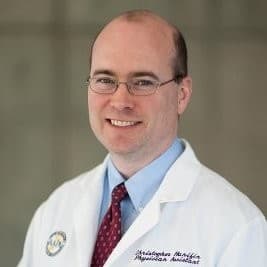
Department Chair and Program Director, Physician Assistant
What role does collaboration and teamwork play in PA training, and how can online programs foster that effectively?
"Healthcare has to be a team endeavor. In an inpatient setting a patient’s team might include physicians and PAs, nurses and nurses aids, rehabilitation professionals like physical and occupational therapists, and other ancillary staff like social workers.
It is essential that student be trained to take a 'big picture' view. They need to know all of the resources available to assist with patient care and know how to coordinate them well to promote the best possible outcome."
Many students are drawn to PA programs because of career stability and flexibility. What realities of the profession should they be prepared for?
"Healthcare remains very attractive as a secure field to work in. No matter what the economy looks like, people will need healthcare. Our population is aging with a large burden of chronic diseases, so the need has never been greater.
The flexibility is also a great aspect of the career. There really is no other medical profession that allows one to switch specialties the way PAs can. If you come out of school and find you are not well suited to a particular setting, it is relatively easy to move on to something else.
The flexibility is also a great aspect of the career. There really is no other medical profession that allows one to switch specialties the way PAs can.
In terms of the realities of the profession, PAs should be prepared to face the same frustrations that many physicians face. Medicine has become highly corporatized, and clinicians often feel that their autonomy is limited by working within complex bureaucratic structures. Clinicians are trying to make decisions at bedside in the interest of an individual patient in the face of policies that might have been developed by business people with no clinical background."
What advice would you give prospective students in this field?
"Be 100% sure you know what you are getting yourself into. There is no career more rewarding that helping the sick and injured get back to a normal life. But realize that much of your time will not be directly occupied by this work. It often seems like every 5 minutes you spend with a patient is followed by 20 minutes of paperwork.
Be sure to speak with a lot of PAs in different fields, and be sure to ask them what they like and dislike about the career."

Internal Medicine Resident Physician and Physician-Researcher
How should students evaluate hybrid PA programs, especially regarding clinical placement support?
"You have to read the fine print on their guidelines for clinical placements. A program that promises placement and one that provides support are very different. Because 'assistance' only meant a list of phone numbers, I have witnessed students in hybrid programs become stuck. You are looking for a program that will protect both the preceptor and the site.
Verify whether they have a well-established network in your neighborhood. If they don't, you may find that cold calling physicians takes up more of your time than studying medicine. Don't commit until you have a clear idea of who is responsible for the legwork."
What misconceptions do applicants often have about the PA profession?
"I see a lot of people who are misled about PAs; they think PAs have no independence and just follow doctors all day. Supervision is part of the law, but in reality, PAs with a lot of experience often have their own offices or see their own groups of patients without having to check in with anyone. For every choice you make, the doctor isn't right there with you, but they might be in the building or just a phone call away.
People applying for the job often don't realize how much deep thinking and making choices on their own they will have to do starting on the first day. At that time, you are that patient’s provider."
What soft skills are most critical for PA success?
"I think that being able to code-switch is more important than being organized or a good boss. If you talk to a patient the way you talk to a surgeon, you have failed.
A scared family won't understand medical jargon, and a busy attending physician won't appreciate relaxed language. You need to immediately change how you talk. Tell the surgeon, 'I need a CT because this patient has acute rebounding pain,' and then tell the patient, 'We need to do a special scan to check your belly because it's inflamed.'
The best physician assistants are like international translators. This makes sure the medical team works quickly while the patient stays calm and in the loop."
What industry trends should future PAs be aware of?
"Forget about telemedicine or a lack of primary care; the real trend that future PAs are missing is health informatics. Providers have a lot of patient data, but they have trouble using it well. This leaves us with information but no understanding.
You need to know how to read data from wearables and electronic records. Instead of just asking a patient how they feel today, look at their watch to see how their heart rate has changed over the past six months. When you know how to use data, you can be proactive instead of reactive. Not only does it make you a doctor, but it also makes you a medical strategist."
Any advice for students navigating the competitiveness of PA admissions?
"Stop writing personal statements that are too general. There are a lot of essays that say things like 'I want to help people' or 'I love science.' This is true for all medical fields. You need to be very clear about why you chose the PA route.
Share a true story about a time you worked with a PA. Show me that you know what the job is. You win if you can explain the difference between a doctor and a PA in your own words based on what you know. Be honest about your trip. Admissions officers read thousands of these essays. They will move on if you bore them. Get them interested in your story."
EXPERT TIP
"Prior to signing anything, be sure you understand how clinical rotations function. It is a common misconception among online students that the school will take care of all the details. Some online degree programs make it difficult for students by requiring them to seek out their own clinical sites and preceptors."
FAQs About Online Physician Assistant Master's Programs
What Is a Physician Assistant Master’s Program Like?
A master's degree is required to practice as a PA, so it's important to understand the degree's structure and desired learning outcomes. During a master's program, students cover advanced topics in the biomechanics of the human body, disease pathology, healthcare policy, and medical ethics and privacy law. They also work hundreds of clinical hours under the supervision of an experienced PA in a care setting. Students may complete one or more clinical experience rotations, usually over two semesters. Some programs offer concentrations in areas such as internal medicine, emergency medicine, or neonatology. Most physician assistant master's programs require two to three years of full-time study.
Because physician assistantship is a growing field, admission to an online program can be competitive. Admissions requirements vary, but applicants must have a bachelor's degree from an accredited college, usually with a minimum 3.0 GPA. Graduate admissions officers may prefer candidates with clinical or healthcare experience. Common undergraduate majors include nursing, paramedic studies, physical therapy, phlebotomy, and respiratory therapy. Depending on the applicant's academic background, program directors may require them to complete prerequisites in biology, biochemistry, anatomy, or statistics before beginning the master's course sequence.
Online physician assistant programs are demanding — the curriculum covers a wide variety of material and students often find some subjects more difficult than others. For example, an aptitude with pharmacology or diagnosing injury doesn't guarantee an easy time with healthcare privacy and ethics courses. Students may also have difficulty balancing their work and personal circumstances with classwork, especially over the course of the two to three years a program requires.
What Courses Do You Take in a Physician Assistant Master’s Program?
The curriculum for a physician assistant master's program includes human physiology-related subjects such as biology, biochemistry, and human anatomy, and classes that are focused on medical practice and diagnosis. Below is a selection of common courses students are likely to encounter in their studies.
- Applied Human Anatomy: As medical professionals, PAs seek to diagnose and treat patients with physical ailments, and they must understand human physiology to be effective. Lessons cover body sections and organ systems, pathology, and diagnostic imaging. In addition, students dissect cadavers to examine how internal anatomy is organized.
- Clinical Medicine: Students learn how to diagnose health issues and create treatment plans. They study the divisions of medical practice, covering areas such as pediatrics, neurology, dermatology, endocrinology, and orthopedics. Master's students are often required to take a two- or three-course track in clinical medicine, building on earlier skills and clinical knowledge as they progress.
- Diagnostic Methods: Faculty prepare students to order and interpret the results of diagnostic tests. Topics include fluid analysis, laboratory medicine, and the indications of different diagnostic imaging modalities such as CT scans and MRI.
- Medical Ethics: This course covers the importance of a patient-centered approach to ethical questions of diagnosis, treatment, and privacy. Students learn the limits of the PA role and how to effectively work with other healthcare professionals such as physicians and nurse practitioners. Professors may discuss lessons learned from notable malpractice cases.
- Patient Assessment and History: Students learn the importance of proper assessment and patient history-taking in their role as PAs. Professors emphasize critical skills such as active listening, interrogative questioning, medical terminology, documentation, and recordkeeping. Enrollees gain practical experience by taking histories and performing assessments of both actors and real patients.
What Should You Consider When Choosing an Online Physician Assistant Master’s Program?
You need to consider many factors when deciding on a master's degree, and how heavily you weigh each factor will depend on your personal circumstances. The best online physician assistant programs are accredited and offer you the structure and curriculum you need to meet your personal and professional goals. Below are a few questions you can ask about each program you're considering.
Is it accredited?
You want to ensure that both the school and the individual program are accredited because this will be crucial for obtaining certification. See the Accredited Online Physician Assistant Programs section below for more information.
Can I still work while I attend school?
If you want to keep working while earning your master's degree, you may need to choose a program with asynchronous online classes that don't require you to sign in at particular times. At the very least, you'll need a program with class times that don't interfere with your work schedule.
How well does it prepare graduates for certification?
Research each school's pass rate for the , commonly referred to as PANCE. Colleges with good pass rates generally feature these numbers prominently on their PA program pages.
What does it cost?
Tuition is the largest portion of a degree's cost, but not the only one. Be sure to tally mandatory fees and the cost of books and supplies when calculating expenses. PA students may be able to secure financial aid to help alleviate costs. See below for details.
What Financial Aid and Scholarship Options Are Available for Physician Assistant Master’s Students?
Financial aid can help reduce student debt by lowering the total cost of a degree. Although most graduate students take out student loans, they should give priority to scholarships, grants, and work-study opportunities that don't require repayment.
Most financial aid processes begin by applying for federal aid through the and institutional awards through a student's college. Below, we've listed a few opportunities from private sources that PA students may also qualify for. Always check with your school's financial aid office to make sure you can use a particular scholarship at that school.
- : The NHSC may pay for tuition and fees and offer a stipend to eligible students. Applicants must agree to work in an underserved area for a period of one year for each year of funding they receive, with a two-year minimum commitment. As a federal program, only U.S. citizens are eligible for this award.
- : This non-profit organization provides dozens of scholarship opportunities each year, with awards ranging from $1,000 to $2,500. Applicants must be student members of the American Academy of PAs in an accredited degree program. Additional criteria vary by scholarship. For example, the Joyce Nichols Memorial Scholarship is only awarded to Black students.
- : Two recipients each year will earn $1,500 toward their final year of a master's degree in physician assistant studies. Applicants must be members of the Society of Emergency Medicine Physician Assistants who intend to work in emergency medicine after graduation.
Is Accreditation Important for Physician Assistant Master’s Programs?
Accreditation is an important indication of a school's quality. Colleges earn accreditation by passing a voluntary review by a recognized agency at the national or regional level, certifying that the school meets specified standards for faculty, curricula, and student support. Regional accreditation is more prestigious than national accreditation, and regionally accredited schools will usually only accept transfer credits from other regionally accredited schools. However, either designation allows a school's online students to receive federal financial aid.
Beyond regional and national accreditation at the school level, individual degree programs can also earn accreditation. The Accreditation Review Commission on Education for the Physician Assistant, Inc. is the recognized accrediting body for degrees in physician assistant studies. It's important that you graduate from a program accredited by the ARC-PA, or you won't be able to obtain certification to practice as a PA in any state.
How Do You Become Certified and Licensed as a Physician Assistant?
The road to PA certification starts with a bachelor's degree, progresses through a master's degree and clinical rotations, and ends with a comprehensive exam called the PANCE. This test is administered by the , which also maintains continuing education standards for PAs.
To sit for the exam, applicants must have graduated from an ARC-PA-accredited master's degree program within the previous six years. Prospective PAs can make six attempts to pass the PANCE before they're required to re-enroll and graduate from a master's program again. Once certified, PAs must complete 100 hours of continuing medical education every five years to maintain their credential.
Only certified PAs can apply for a license to practice in their state or the District of Columbia. The American Academy of PAs maintains a for reference. In most states, part of the licensure requirement is an agreement with a supervising physician that defines the scope of the PAs authority. PAs often serve as primary care providers and have a wide range of diagnostic and prescriptive powers, and supervisory agreements are designed to ensure necessary oversight.
Experienced PAs can study for . These certificates indicate proficiency in one of seven specializations such as emergency medicine or orthopedic surgery. CAQs last for 10 years and may help make a PA more competitive in their job search.
What Can I Do With an Online Physician Assistant Master's Degree?
PA studies is a specialized educational discipline designed only to educate PAs. But the possible career options for licensed PAs are almost as wide as the medical field itself, and PAs can work for doctors in almost any specialty. This versatility is one reason why the for PAs in the U.S. (growing by 20% over the next decade). Other reasons for the increasing need for medical care include a and an aging population.
Below are some examples of specialties that a PA can pursue once they earn certification and licensure.
- Emergency Medicine: These PAs work in the high-stress environment of an emergency department, helping doctors treat patients with acute trauma. In a given shift, they might perform screenings as part of patient triage, order diagnostic tests, refer patients to specialists, or treat patients with serious injuries such as lacerations, gunshot wounds, or burns. They have their own professional group, the .
- Pediatrics: To do their jobs well, pediatric PAs need a deep understanding of the physical and psychological differences between children and adolescents and all other patient populations. They must be able to put anxious youngsters and their guardians at ease while treating the full spectrum of medical issues that affect this age group. This specialty also has its own professional organization, the .
- Primary Care: These PAs assist family doctors who perform routine check-ups and examine patients for a range of concerns. They need to be skilled at interrogative questioning when screening patients who have trouble articulating their symptoms.
- Surgery: This specialty contains many subspecialties because there are many types of surgeons. Surgical PAs consult with patients before and after operations, prepare and proffer equipment to doctors during procedures, and create discharge plans for patients. According to the AAPA, the highest paid PAs are those who assist with cardiovascular and thoracic surgery. The supports PAs in this specialty.
Is Earning a Physician Assistant Master's Degree Worth It?
No single answer will suit all who ask this question because everyone's personal and financial circumstances differ. However, an online master's degree in physician assistant studies is the gateway to a lucrative and stable profession that many people have found rewarding.
Potential Benefits
- Studies show that, in general, PAs are satisfied with their jobs. One study found nearly among PAs overall.
- PAs are paid well and are likely to enjoy healthy job growth of 20% in the coming decade, according to the BLS, which is much faster than the average job growth across all occupations.
Potential Drawbacks
- The same study (linked above) that details PA job satisfaction also points to their potential for high stress and burnout. The AAPA even to address the problem, which stems from increased workloads and the complexities of the American healthcare system.
- It may be difficult for PAs to transition into non-PA fields if they want a career change, because a master's degree in physician assistant studies is highly specialized for that practice.
Beyond these general pros and cons of the career, you may wonder whether this degree is worth pursuing via distance learning. On the positive side, online courses are a convenient way to learn for students who work and juggle other responsibilities. With most programs, you can sign in at any time that fits your schedule to view lectures, submit assignments, and post to discussion forums.
However, there are potential downsides to studying for a PA degree online. An online master's degree in physician assistant studies might not always feel like a strictly distance learning objective because students may be required to travel to campus for lab work or other in-person activities. In some cases, they may be able to complete lab assignments at an authorized facility nearby or by utilizing a lab kit at home. Finally, all students need to complete hundreds of in-person clinical hours whether they take classes online or on campus.
Ultimately, it's for you to decide whether you prefer the convenience of online learning or the interactive elements of live classes, as both have merit.
Can I Get a Physician Assistant Degree Online?
Yes, you can earn a physician assistant degree online by choosing a school from our list above. This may also allow you to work while studying for your master's degree. Most online degree tracks are full-time, though some schools may offer part-time options. Students will need to complete clinical hours in person, but they can do so at an approved setting in their community, which could be with their current employer. Some online PA programs may also require students to perform lab work on campus for a certain number of days per year.
What Is the Fastest Way To Become a Physician Assistant?
Enrolling in a degree-completion program is often the speediest path to becoming a physician assistant. A degree-completion track, sometimes called a bridge program, requires you to earn a bachelor's degree in physician assistant studies or take prerequisite courses if you've completed your bachelor's degree in another subject. You'll build on your foundational knowledge with 16-30 more credit hours of advanced coursework and master's-level clinical rotations. Master's degree-completion programs can be completed in as little as one year of full-time study.
What's the Difference Between a Physician Assistant and a Nurse Practitioner?
In some ways, the roles of nurse practitioner and physician assistant are similar. Professionals in these roles must hold master's degrees and be licensed to practice, and they earn comparable salaries. The Bureau of Labor Statistics also projects a dramatic increase in demand for professionals with either of these credentials.
In practice, however, the roles are quite different. Nurse practitioners come from the nursing tradition, so they may take a more holistic approach to long-term care and wellness. Physician assistants come from the medical model, so they are more focused on diagnosing and treating ailments and injuries.
One of our experts above, Dr. Menachem Jacobs (MD), offered this advice to students who are comparing PA programs to NP or medical school pathways:
"I tell students not to just look at the first tuition cost, but to also look at the recertification standards. A lifetime of important tests can be tiring, even though low-cost classes seem great at first.
If you ignore the upkeep process, you'll have a lot of stress every ten years. No matter what area they work in, PAs must pass the PANRE, a generalist test, to keep working. Instead of a big test, NPs usually keep their certification by completing a certain number of hours of ongoing education. If you really don't like standardized tests, that ten-year cycle might make you wish you hadn't chosen the PA way."
Student Reviews of Online Physician Assistant Programs
The Wake Forest PA program is unquestionably difficult but I believe that it has prepared me well for my future career. The faculty does a good job of drawing out information and teaching us how to utilize appropriate, accurate resources when searching for information. The teaching throughout the week supplements the case study work as well, allowing us to tie together the different disciplines.
Review Date: 3/29/2017
Would Recommend: Yes
Helpful for Career: Yes
I'm not gonna lie... when I went the quality of instruction was "ok"... most of the profs simply reading from power points, we could have done that at home.... nothing groundbreaking/ inspiring/ novel here.... also, and this may be nit-picking, but all the profs are essentially suburban "Long-Island types" which is kind of a shame to be schooling in the city yet not getting a "live and work in NYC" feel from instructors.... HOWEVER... the boon here which cannot be quantified is that you will rotate... Read More
Review Date: 4/28/2023
Would Recommend: Yes
Helpful for Career: No
There are four campuses and since it is a state school it is cheaper than most other Physician Assistant programs
Review Date: 2/12/2013
Would Recommend: Yes
Helpful for Career: No
I am a Physician Assistant grad student. The program is amazing and the support system from the professors is that unlike any other university. I have compared with some of my friends in sorrounding schools and I think my program at Keiser is the best one. I wish they had a better reputation, because they have an amazing diverse program.
Review Date: 2/17/2013
Would Recommend: Yes
Helpful for Career: No
Pro: The school and its staff is very determined to help guide the students. There are a lot of resources available to the students Con: Some of the teachers are poor.
Review Date: 8/24/2014
Would Recommend: Yes
Helpful for Career: No
The University of Toledo Physician Assistant (PA) Program has been both a rewarding and rigorous educational experience. As with all PA programs, the curriculum is very full, and much time is needed to master in the material. Unlike other PA Schools in the region, the UT program shares the campus of a major regional medical center, which provides many opportunities. Many of our clinical medicine lectures have been provided by experts on the topics, which gives me confidence that we have received... Read More
Review Date: 10/23/2017
Would Recommend: Yes
Helpful for Career: No
This program offers all the tools necessary to become a great Physician Assistant. The professors are knowledgeable and approachable. I know that upon graduation, I will be prepared to be the most knowledgeable and compassionate PA that I can be.
Review Date: 11/16/2014
Would Recommend: Yes
Helpful for Career: No
The Physician Assistant Master's program at Mass. College of Pharmacy & Health Sciences in Boston is exceptional in terms of courses offered, faculty and learning resources made available to the student. For example, I was able to take Human Anatomy through Harvard Medical School - a definite perk!
Review Date: 3/23/2015
Would Recommend: Yes
Helpful for Career: No
I am an incoming first year student and these are my thoughts based on the summer packet as well as communication that I have had with the different departments. The program is very promising
Review Date: 7/14/2014
Would Recommend: Yes
Helpful for Career: No
Physician Assistant program is the only distance education program in the nation! Great faculty, staff and environment.
Review Date: 3/17/2014
Would Recommend: Yes
Helpful for Career: No
You will be hard-pressed to find a better education than at Nova Southeastern University. The professors and instructors at the school are top notch, and they provide a learning environment that public universities strive for. Unfortunately the location of the school places students near one of the busiest sections in the entire city. What could easily be a 5-10 mile joy ride turns into a 45-60 minute roadblock of cars trying their best to get onto the interstate. Overall the school excels in its... Read More
Review Date: 4/29/2015
Would Recommend: Yes
Helpful for Career: No
This program is very intense, but at the same time prepares me for the future. Cons of this program is that there is no 3 year program versus 2 years, so some like myself, A father could possible work part time while in school. The pros are that it is very close to home, most affordable compared to other surrounding Physician Assistant programs within the area.
Review Date: 4/19/2015
Would Recommend: Yes
Helpful for Career: No
Pros- location and reputation Cons- there are none!
Review Date: 5/24/2015
Would Recommend: Yes
Helpful for Career: No
The Physician Assistant Program at the University of New Mexico has many positive aspects. The emphasis placed on community and rural healthcare; the academic approach of Problem Based Learning tutorials; the success rate of the program as evidenced by the PANCE pass rates of alumni; the small class size; the individual attention granted to students; and the percentage of students retained in New Mexico practicing primary care are all reasons the University of New Mexico Physician Assistant program... Read More
Review Date: 11/29/2013
Would Recommend: Yes
Helpful for Career: No
King's College Physician Assistant program will definitely prepare you for your future career. The staff are available either in person or via email and cell phones. You could tell that they truly care about the success of each student and they do what they could to see you reach your goals. The security on and off campus is amazing. Due to the somewhat sketchy location of the school, it is very reasurring to have campus police willing to escort students to and from their cars in the school parking... Read More
Review Date: 7/4/2014
Would Recommend: Yes
Helpful for Career: No
The professors are very caring and knowledgable about the field. They all practiced as Physician Assistants for many years and have a great amount of clinical insight. Cons to the program include not only the cost, but the lack of direction and organization within the program. We (students and faculty) all do the best that we can, but there are no guarantees of academic success. However, you WILL learn about yourself, including how you handle stress in a professional and home environment; you WILL... Read More
Review Date: 7/12/2014
Would Recommend: No
Helpful for Career: No
Be aware that Kettering is a Christian college, which can be both a pro and a con. I felt that the mandatory Spirituality in Healthcare class we took had a very narrow focus and left some significant gaps in our understanding of non-Christian religions. Otherwise, the PA staff are very helpful and do a great job!
Review Date: 8/18/2014
Would Recommend: Yes
Helpful for Career: No
PA school is challenging but Marietta College creates an amazing school environment to foster higher learning and work towards our ultimate career goals of becoming a Physician Assistant.
Review Date: 11/11/2014
Would Recommend: Yes
Helpful for Career: No
Pros- Faculty are always available to help with class and personal issues. They are always willing to help and friendly. Majority of the professors are great at teaching and always encouraging our growth. Teleconferencing is great because our lectures are recorded and we can watch them when we please. Also it gives us access to some great professors Cons- Teleconferencing can sometimes get disconnected or have bad feedback and can be frustrating.
Review Date: 9/24/2013
Would Recommend: Yes
Helpful for Career: No
Pros- The Physician Assistant Studies Program at the University of Texas-Pan American definitely prepares students for the challenges and benefits yet to face in the medical field. Cons- None so far.
Review Date: 7/10/2013
Would Recommend: Yes
Helpful for Career: No