2026 Most Affordable Online Law Enforcement Degrees
Explore affordable online law enforcement degrees, ranked using independently verified tuition data and supported by verified student reviews.
Why Trust Us?
- 90,000+ Verified Student Reviews
- Manually Researched Tuition
- 200+ Expert Interviews
- 1,800+ jmcomicÂþ»s
- 30,000+ Online Degrees
Find the most affordable online law enforcement degrees at the bachelor's level below in order of lowest tuition.
Key Takeaways:
- Union Commonwealth University leads the ranking at $6,750 annually, showing that bachelor’s-level law enforcement programs don’t have to cost a fortune.
- Most schools on the list charge the same price for in-state and out-of-state students.
- Recognized national online universities remain competitive on price. Well-known providers like SNHU Online, Purdue Global, Liberty, and UMGC appear in the middle of the ranking, offering affordability as well as massive online infrastructure.
All schools we feature on our site are accredited. We manually verify tuition costs to ensure the most up-to-date and accurate information.

How We Rank "Most Affordable" Schools

The OnlineU research team manually collects and verifies tuition data for every school on our lists, ensuring you see accurate, up-to-date costs whether you're pursuing an associate, bachelor's, master's, or doctoral program. To qualify, schools must offer fully online degrees, hold institutional accreditation, and have verifiable enrollment data through the National Center for Education Statistics. While some of our rankings include partner schools, every school is evaluated using the exact same criteria.
We prioritize schools that offer a consistent tuition rate across programs at the same degree level, so you're not caught off guard by unexpected price differences between majors, and for graduate programs we go a step further by individually calculating program costs since credit requirements and fees vary widely.
2026 Most Affordable Online Law Enforcement Degrees
| Rank | School | Annual In-State Tuition | Annual Out-of-State Tuition | Recommendation | Median Salary |
|---|---|---|---|---|---|
| Union Commonwealth University | $6,750 | $6,750 | 100% | N/A | |
| Columbia Southern University | $8,340 | $8,340 | 78% | $61,453 | |
| Trine University Online | $8,970 | $8,970 | N/A | $44,704 | |
| University of Maryland Global Campus | $9,900 | $14,970 | 59% | $68,673 | |
| Waldorf University | $10,200 | $10,200 | 95% | $53,890 | |
| Southern New Hampshire University Online | $10,260 | $10,260 | 62% | $67,442 | |
| Western Illinois University | $10,296 | $10,296 | 89% | $65,120 | |
| Purdue Global | $11,130 | $11,130 | 76% | $48,978 | |
| Liberty University | $11,700 | $11,700 | 57% | $58,274 | |
| Culver-Stockton College | $12,000 | $12,000 | 100% | $50,911 | |
| Nelson University | $13,350 | $13,350 | 100% | N/A | |
| University of Colorado Colorado Springs | $13,560 | $19,590 | 83% | $53,733 | |
| Bellevue University | $13,770 | $13,770 | 67% | $47,724 | |
| UMass Global | $15,000 | $15,000 | 56% | N/A | |
| University of Arizona | $15,750 | $15,750 | 97% | N/A | |
| Arizona State University, Online | $17,400 | $17,400 | 90% | $56,419 |

Online Degree:
What Sets This Program Apart:
- This is the #1 cheapest online degree in law enforcement at $6,750/year for in-state and out-of-state students.
- This law enforcement program deeply embeds constitutional procedure into the curriculum. Students examine Supreme Court interpretations of defendants’ rights and then connect those rulings to investigative procedure, evidence handling, and field tactics.
- UCU offers topical electives around issues many law enforcement programs avoid treating as standalone subjects, including excessive force, women in policing, comparative police systems, and victimization.
Student Review Summary: Reviews describe a strongly positive experience centered on Union Commonwealth University’s small, welcoming campus and highly personalized support. Many reviewers praise the low faculty-to-student ratio, saying instructors are accessible, encouraging, and invested in individual progress through mentoring, research, and writing-intensive coursework. Several note that the environment works especially well for nontraditional and working learners because schedules, staff support, and financial aid help balance education with jobs and family responsibilities. The main drawbacks are inconsistency across professors and administrative offices, limited responsiveness from senior leadership staff, and tuition that some feel is somewhat high, though still worthwhile overall.
This is an AI-generated overview of real student feedback submitted to OnlineU, highlighting common themes and insights. The summary was reviewed for accuracy.- Undergraduate Online: 63 enrolled
- Median Earnings: N/A
- Avg. Grad. Rate: 36%
- Retention Rate: 58%

Online Degree:
What Sets This Program Apart:
- At $8,340 in annual tuition, it ranks #2 on this list, while its program-specific median earnings of $61,453 place it in the top 17% for pay outcomes among comparable programs.
- This bachelor’s builds a 12-credit concentration around the scientific and procedural work involved in fire-related investigations, giving the program a clearer occupational lane than some others on this list. Specifically, faculty push students to analyze arson as a crime, examine the chemistry of combustion, and understand the physical properties of fuel.
Student Review Summary: Reviews of Columbia Southern University are largely favorable, with students consistently praising its affordability, flexible pacing, included textbooks, and strong fit for working adults, military personnel, and parents balancing unpredictable schedules. Many describe responsive advisors, helpful instructors, and generous transfer-credit evaluations as major advantages. Students also note that coursework is often more writing-heavy and time-intensive than expected, requiring discipline rather than offering an easy shortcut. Negative feedback centers on inconsistent professor quality, slow or confusing financial aid and refund processing, limited or generic assignment feedback, occasional administrative errors, and long-standing concerns about credit transferability and accreditation that some felt hurt graduate-school or career options.
This is an AI-generated overview of real student feedback submitted to OnlineU, highlighting common themes and insights. The summary was reviewed for accuracy.- Undergraduate Online: 12,213 enrolled
- Median Earnings: $61,453
- Avg. Grad. Rate: 37%
- Retention Rate: 59%

Online Degree:
What Sets This Program Apart:
- Trine’s Indiana Law Enforcement concentration is designed around officers who are already inside the profession and need a degree that recognizes existing training. The concentration grants academic credit for completion of the Indiana Law Enforcement Academy Basic Police Training Course, effectively treating academy preparation as equivalent upper-level academic work. It's an advancement bridge for sworn officers trying to move into supervisory or specialized public safety roles.
- Trine highlights instruction from current judges, lawyers, coroners, law enforcement administrators, and field professionals, creating a faculty structure tied directly to operational systems students may already work within.
- Undergraduate Online: 672 enrolled
- Median Earnings: $44,704
- Avg. Grad. Rate: N/A
- Retention Rate: 100%

Online Degree:
What Sets This Program Apart:
- This law enforcement bachelor's is for those who already have academy training and arrest-power experience, and who need that experience converted into a bachelor’s degree with as little duplication as possible. It's for officers who may be preparing for promotion boards, federal applications, administrative roles, or a post-service transition.
- UMGC’s scenario-based assignments are somewhat unique. Students may analyze a fact pattern to determine criminal culpability, build a community action plan as a law enforcement administrator, or identify key facts in a serial murder investigation. Students mirror the interpretive work officers and administrators actually perform, like deciding what matters, separating relevant facts from noise, translating incidents into defensible documentation, and coordinating responses across agencies.
Student Review Summary: Reviews describe a highly flexible online experience that works well for working adults, military members, and anyone needing short terms, transfer credit options, and self-paced structure. Many say success depends heavily on discipline, time management, and strong writing skills because courses often emphasize papers, discussion posts, APA formatting, and independent learning more than lectures. Positive reviews praise relevant coursework, knowledgeable professors, practical career application, and convenience. Negative reviews focus on inconsistent teaching quality, uneven group projects, limited hands-on instruction, outdated or thin course materials, and especially recurring frustration with advising, admissions, billing, financial aid, transcript processing, and confusing administrative systems.
This is an AI-generated overview of real student feedback submitted to OnlineU, highlighting common themes and insights. The summary was reviewed for accuracy.- Undergraduate Online: 46,379 enrolled
- Median Earnings: $68,673
- Avg. Grad. Rate: 30%
- Retention Rate: 53%

Online Degree:
What Sets This Program Apart:
- This degree is built more like a menu of adjacent public safety problems — forensic psychology, forensic mental health, cybersecurity, homeland security, public relations, emergency management, terrorism, weapons of mass destruction, and leadership communication — which gives students a way to shape the degree around the kind of institutional setting they expect to enter.
- The certificate options add another layer of specialization. Waldorf’s homeland security certificates in terrorism and weapons of mass destruction are distinct for pushing the curriculum into threat-specific preparation.
Student Review Summary: Reviews of Waldorf University are overwhelmingly positive, with repeated praise for responsive professors, attentive advisers, and staff who simplify admissions, transfer credit evaluation, and financial aid. Many describe the online format as well organized, flexible, and well suited for full-time workers, with eight-week terms, manageable pacing for some, and strong communication around deadlines. Affordability stands out, especially with books often included in tuition. Several reviewers also value challenging coursework, constructive feedback, and practical learning they could apply on the job. Criticisms focus on inconsistent faculty responsiveness, limited career guidance, heavy weekly time demands, and one severe complaint about campus safety and institutional handling of misconduct.
This is an AI-generated overview of real student feedback submitted to OnlineU, highlighting common themes and insights. The summary was reviewed for accuracy.- Undergraduate Online: 1,247 enrolled
- Median Earnings: $53,890
- Avg. Grad. Rate: 29%
- Retention Rate: 52%
Affordable Online Law Enforcement Degrees: A Data-Driven Comparison
We want to pair our most affordable online degrees with more data to paint the fullest picture for you in a way that allows you to choose the best option for your needs. When considering the schools above, you should think about affordability, of course, but alongside other important quality metrics, like strong career outcomes and academic features in the law enforcement programs that cater to your specific needs.
Our list above focuses on yearly, in-state tuition as the primary factor to help narrow down your initial options among all the online law enforcement degrees out there, but you also want to consider earning potential, student support, and specialized program features. That's what our analysis below is intended to help you with. We dug into the data so that you don't have to.
Let’s take a closer look at what makes each of these budget-friendly online law enforcement degrees stand out.
Affordability vs. Earning Potential in Law Enforcement Bachelor's Degrees Online
For those entering law enforcement, balancing education costs with future earnings is mission critical.
Many law enforcement careers — whether in policing, corrections, or even federal agencies — offer structured salary tiers based on education and experience. The right degree can qualify graduates for promotions, specialized roles, and higher-paying positions, but overpaying for a degree with weak job placement could mean unnecessary debt that you could've actually avoided.
In the graph below, keep in mind that the earnings are among the alums of the law enforcement degrees at each school, and it represents salaries around four years after graduation. So, it captures early career salary only.
For the second year in a row, Union Commonwealth University (UCU) remains the lowest-cost option on the list at $6,750 per year. Even being a budget option for a law enforcement degree, it also boasts an unusually strong student sentiment, including a 100% recommendation rate and a 4.38/5 overall rating. These student reviews provide a window into people's firsthand experience, which is valuable data. Unfortunately, there wasn't any program earning data for law enforcement majors, so that remains a mystery.
Columbia Southern University (CSU), ranked second at $8,340 annually, has a measurable return on investment. CSU's online B.S. in Criminal Justice Administration with a concentration in Arson Investigation is the specific degree we're talking about. And graduates with this degree from CSU report median earnings of $61,453, placing the program in the top 17% for salary outcomes among comparable degrees in the field.
Similarly, Western Illinois University (WIU) and Southern New Hampshire University Online (SNHU) also pair tuitions below $11,000/year with strong earnings — $65,120 and $67,442 respectively. So, as the graph above indicates, affordability and income potential are not mutually exclusive.
If you didn't find what you're looking for from our list of affordable law enforcement programs above, you can also check out our list of the best online law enforcement degrees, which shows the strongest options based purely on student success. On that last, we also include the annual tuition for total transparency when it comes to cost.
For the second year in a row, UCU remains the lowest-cost option on the list at $6,750 per year...
For law enforcement professionals looking to advance — whether moving from patrol to leadership or transitioning to federal agencies — selecting a program that balances affordability with strong salary outcomes can accelerate career growth, improve pay, and open doors to specialized fields like investigations or homeland security.
Looking at similar online programs? Check out our list of the most affordable online homeland security degrees or the best online criminal justice programs.
Choosing the Right Budget-Friendly Online Law Enforcement Degree for Your Career Goals
Direct law enforcement majors, like the ones at Union Commonwealth University, UMGC, and ASU Online, are designed for students who want tightly aligned policing coursework, credit for academy or duty experience, and a clear path toward promotion. These programs emphasize applied skills such as constitutional policing, investigations, de-escalation, and community engagement, and they tend to work especially well for current officers or recruits who want to finish efficiently while keeping tuition low.
Other students may benefit more from specialized or adjacent pathways, like programs with concentrations:
Columbia Southern hosts an Arson Investigation track.
Waldorf hosts a Forensic Psychology track.
Bellevue, Liberty, and the the University of Arizona offer much broader career mobility into federal agencies, intelligence analysis, or homeland security. These schools let you focus on niche investigative or behavioral roles early in your program via intelligence- and security-focused degrees.
When weighing the right online law enforcement degrees from our affordability list above, students should look beyond tuition as the one and only factor to consider and analyze how each program converts prior experience, specialization, and applied learning into long-term career flexibility and advancement.
Law Enforcement Careers With — and Without — a Bachelor’s Degree
Without a college degree, law enforcement career options tend to concentrate in frontline or support roles.
According to the Bureau of Labor Statistics () data, positions such as correctional officers ($57,950 median pay), security guards ($38,390), private detectives ($52,370), firefighters ($59,530), and EMTs or paramedics ($46,350) typically just require a high school diploma or a postsecondary nondegree credential. These jobs can offer stable entry into public safety, but advancement into supervisory, investigative, or administrative roles is often limited without at least some higher education.
A bachelor’s degree significantly expands your opportunities for taking on a variety of roles and your earning potential. Careers such as emergency management director ($86,130 median pay), forensic science technician ($67,440), and probation officer or correctional treatment specialist ($64,520) typically require a four-year degree and offer clearer advancement pathways over time.
Even within policing, departments increasingly favor or reward bachelor’s-level education for promotion into detective, supervisory, intelligence, or other leadership roles in law enforcement. So, if you're still weighing whether or not you should pursue a degree in law enforcement, the data clearly shows that higher education improves pay and unlocks access to more specialized law enforcement careers.
A Former Police Captain on What Really Matters in a Law Enforcement Degree
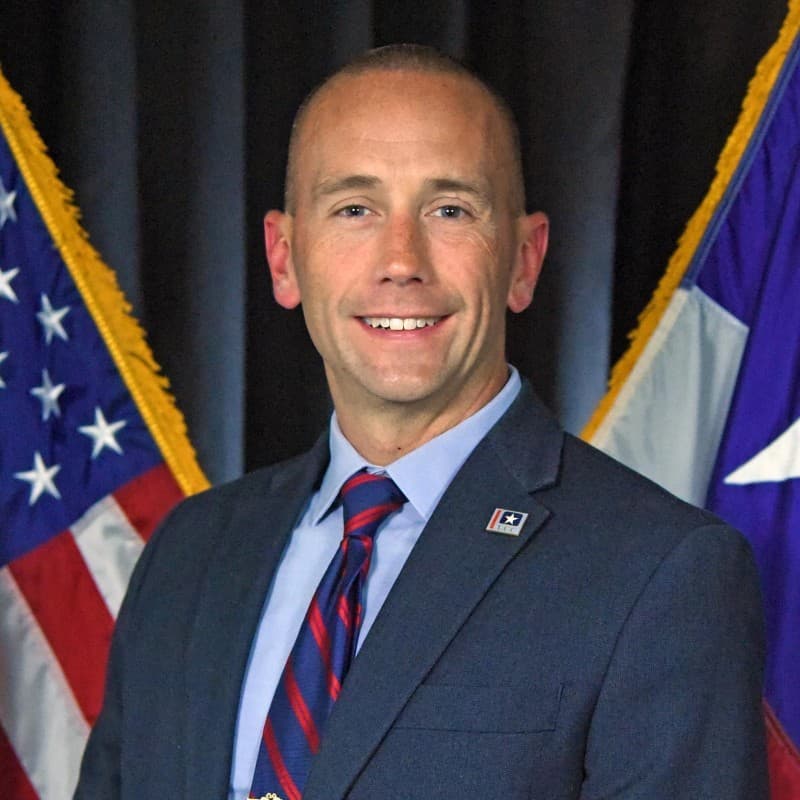
Director of Law Enforcement and Public Safety
In your view, what ultimately matters even more than tuition when choosing a law enforcement degree online?
"Those interested in pursuing a degree in law enforcement, should really look at what the curriculum can offer that integrates practical skills, critical thinking, ethics, community policing strategies, and how the skills you learn can help you evolve when it comes to finding a career. You want to have a clear understanding of the quality of training, real-world applicability, and alignment with today’s policing demands.
I would recommend that you also look at programs that include exercise, scenario-based learning, internships and connections to agencies once you graduate. These real-world and tangible learning opportunities are going to help you succeed in complex environments."
What questions should every student ask before enrolling in an online law enforcement bachelor's degree?
"You should be asking yourself how that particular program ensures practical skill development that goes beyond the class room. Those that do, often are more current in regards to evolving law enforcement practices.
Ask how the curriculum covers ethics, use-of-force decision-making, community engagement, and technological tools that are relevant today. You don’t want to end up in a program that is outdated, or one that only focuses on an online format and doesn’t give you the hands-on experience needed to feel confident in your abilities once you graduate."
The investment in your education can maximize long-term career value.
What habits can help students succeed in online law enforcement degree programs?
"How you build your habits now can transfer into life after your degree. So starting healthy and manageable routines now make it easier to (almost) seamlessly enter the workforce.
Disciplined time management and proactive engagement are a must. You need to treat all coursework with the same discipline you would in the field. I found it helpful to schedule everything out, set milestones, and avoid procrastination by time blocking.
Online formats often depend on clear analysis too, so it’s important to develop your written communication and critical thinking skills to be able to participate comfortably... Work on self-motivation too, but also build a peer network for support that goes both ways, as you will always be working with others."
What should a bachelor’s degree in law enforcement realistically prepare graduates to do?
"It should help students:
Think analytically
Act in an ethical manner
Communicate well in stressful/high-stakes situations
Graduates must be able to:
Assess dynamic threats
Apply sound judgment
Work collaboratively with diverse communities and partners
Therefore, understanding how to de-escalate a situation, leverage non-lethal alternatives when appropriate, and uphold public trust is also something they should be adequately prepared for."
If you could law enforcement students one piece of advice, what would it be?
"What you put into your degree is also what you’re going to get out of it.
For those who are budget conscious, it’s important to remember that the investment in your education can maximize long-term career value. Therefore, short-term savings doesn’t really justify cutting corners if you’re serious about your future. However, it also doesn’t mean you need to go to the most expensive school there is.
I would say choose degrees with strong reputations, solid outcomes, and opportunities for hands-on experience because these often lead to better job prospects and advancement.�
FAQs About Affordable Law Enforcement Degrees Online
How Do You Choose an Affordable Online Bachelor’s Degree in Law Enforcement?
More than a handful of schools offer affordable bachelor's degrees in law enforcement, which can make it difficult to narrow down your options. Fortunately, all the schools we profiled above help students learn the basics of our criminal justice system, as well as everything it takes to begin a rewarding career as a law enforcement officer. We also have a list of the very best online law enforcement degrees, with tuition included as well, but this list is based on student success as our key metric. Interestingly, some of the same schools appear on both lists, including the cheapest online law enforcement degree: Union Commonwealth University!
In addition to learning about the available online degrees in law enforcement, you can also investigate other affordable degrees in related fields, such as the most affordable online criminology degrees and the cheapest homeland security degrees.
Is the Cheapest Online Law Enforcement Degree Always the Best Value?
Now, this one is tricky because no, not always. While UCU above, for example, offers the lowest annual tuition on this list at $6,750, affordability alone doesn’t tell the full story of long-term value. UCU does have good quality indicators, like strong student satisfaction and a practice-focused curriculum, as our expert Joshua Schirard mentions as important in our interview above, but there is currently no available earnings data for its law enforcement graduates. Without this, it may make it harder to evaluate return on investment upfront.
By comparison, slightly higher-cost programs like CSU, WIU, and SNHU Online keep tuition under $11,000 per year while also including measurable earnings outcomes for alums of their law enforcement programs. Graduates from these bachelor's programs report median salaries ranging from about $61,000 to over $67,000 within a few years of completion, suggesting that modestly higher tuition can potentially translate into stronger early-career pay and clearer advancement possibilities.
Honestly, the best value depends on your situation. Usually, the cheapest degree minimizes upfront risk, but programs with proven earnings data may offer greater confidence in long-term career and salary growth.
How Much Does an Online Bachelor’s in Law Enforcement Typically Cost Per Year?
Across the schools in the ranking above, an online bachelor’s in law enforcement online typically costs between $6,750 and $17,400 per year, with most programs costing around $9,000-$11,000. Many of the most affordable options, as you can see from our table above, use flat-rate tuition, meaning online law enforcement students pay the same price regardless of residency. This pricing model helps eliminate out-of-state surcharges and makes annual costs more predictable.
If you want to understand how tuition, fees, and other college costs factor into your total cost of attendance, OnlineU’s article about how to understand tuition and other college expenses can help you budget much more effectively.
Besides the big cost factor, tuition, several of the law enforcement programs we discuss reduce total cost in less obvious ways. Schools like CSU and Liberty include textbooks in tuition, for example. This is a recurring material expense that's just gone. You don't have to worry about it. Others, including UMGC, Trine, SNHU, Purdue Global, and Culver-Stockton, allow students to apply prior police academy training, military service, or professional experience toward academic credit. This can shorten the time it takes to achieve your degree.
Importantly, financial aid can play a huge role in making these degrees even more affordable. Federal and institutional aid, scholarships, grants, and work-study opportunities may significantly offset your out-of-pocket costs. To explore your options and get guidance on applying for aid, visit our financial aid guide. Proper use of aid and transfer credit can shrink your initial costs and actually improve your return on investment over time.
Student Reviews of Online Law Enforcement Programs
I attended the University of Phoenix and completed the Associates Degree Program. Overall, I would rate the Associates Degree program as acceptable, although it too was expensive.
Financial aid department is actually pretty good, and very helpful. I never had any trouble with obtaining financial aid.
Academic advisers are also helpful, however, I believe they call a little too often. There might be some people who need that to keep them motivated, but I was not one of them. I maintained a great GPA... Read More
My biggest complaints with the UOP are the astronomical costs associated with the degree programs. The Bachelor degree program charges around $550/credit hour and you need 120 credit hours, so that equates out to around 66,000 dollars for an online education (I am not sure how this website determined that tuition was only 9,000).
The second biggest complaint is the over-reliance on learning teams in the Bachelor Degree program (this is not an issue in the Associates Degree program). The learning team assignments equal 30-40% of your grade in each class. The main problem is that there is an overwhelming amount of incompetent and lazy team members who put forth next to not effort and do not complete their fair share of the workload. I am not a hard person to please but it is incredibly frustrating to have 3-4 team members who do not participate in any group or assignment discussions and then turn in sloppy work that will ultimately bring your own grade down, unless you are willing to re-do all of their work on top of your own (which you are forced to do unless you are ok with getting bad grades).
Review Date: 5/2/2013
Would Recommend: No
Helpful for Career: Yes
Okay so I attend Ashford University and have for two years now. Since my start of the school I have had to repeat my needs and requirements of what i wanted from them as per my scheduling of classes, veteran affairs, and financial aid needs.
For the military I am allotted Tuition Assistance which requires me to be full time to get everything paid for and my Gi bill/kicker. I have explained that to my advisor too many times, and i am pretty sure it happened every few months. Basically i need to have... Read More
As for financial aid it has been a year and a half and i still have not received my stipend, and they seemed to try to hold on to it or use it for other means than to give it to me. So i ended up using some of it towards two classes due to the fact that two classes that go 5 weeks long with a maximum 4,500 TA basically ends with more than half the year left and no classes.
Overall it has cost me alot of time, wasted energy, i have had to repeat myself i swear probably almost a 1,000 times to them, and i have lost a lot of money and almost went into collections due to not knowing I had a balance for VA.
Review Date: 4/21/2013
Would Recommend: No
Helpful for Career: No
Going to college was one of the best decisions I ever made. I learned to be independent and made friends from all over while living in the dorms. It not only helped me in my career but for success in life in general.
Review Date: 8/19/2015
Would Recommend: Yes
Helpful for Career: Yes